ANDREA CRISP

“
The more I let go of forcing, the more I’m being asked to trust.”
Navigating the Identity Shift in Intuitive Leadership
There comes a point in your growth where courage is no longer the work.
For so long, courage is what moves you forward. It’s what helps you speak, show up, take risks, and build something meaningful. But eventually, something shifts. What once worked begins to feel heavy. Forced. Misaligned.
This is where a deeper invitation begins.
In this episode, I share what it looks like to move from courage into alignment—into a way of leading, living, and growing that is rooted in embodiment, nervous system regulation, and intuitive leadership. Not from the perspective of having arrived, but from being inside the transition itself.
When Pushing Stops Working in Entrepreneurship
There is a phase in spiritual entrepreneurship where pushing, striving, and making things happen feels necessary.
And for a time—it is.
But there comes a moment when that energy no longer creates expansion. Instead, it creates tension.
“What used to feel like momentum starts to feel like pressure.”
This is often the beginning of an identity shift.
Not because something is wrong—but because you’re being asked to lead from a different place.
The Shift from Courage to Alignment
Courage says: Do it anyway.
Alignment says: Wait, listen, trust.
Courage moves you through fear.
Alignment asks you to release control.
“I’m not in a season of figuring it out. I’m in a season of becoming.”
This shift into alignment can feel disorienting, especially for women who are used to holding others, creating results, and being deeply capable.
Because alignment doesn’t always feel productive.
Sometimes it feels like space. Like slowing down. Like not knowing.
Nervous System Regulation and Trust
One of the deepest layers of this work is learning how to feel safe without forcing outcomes.
This is where nervous system regulation becomes essential.
Because the body often associates:
Control with safety
Action with certainty
Striving with worth
Letting go of those patterns can feel like stepping into the unknown.
“My nervous system is learning that I don’t have to grip in order to be supported.”
This is the work of embodiment.
The Identity Void: Becoming Someone New
There is a space in this transition where:
You’re no longer who you were
But you’re not fully anchored in who you’re becoming
This is the identity void.
And it can feel uncomfortable, spacious, and deeply exposing.
“It’s not clean. It’s not linear. It’s a becoming.”
But it’s also where the deepest transformation happens.
What Intuitive Leadership Actually Requires
Intuitive leadership is not about always knowing.
It’s about trusting yourself even when you don’t.
It’s about leading from connection instead of control.
It’s about allowing your next level to emerge instead of forcing it into existence.
“The more I trust, the less I need to prove.”
Original Music And Production By Stephen Crilly.
-
I want to start this episode a little differently because what I'm talking about today isn't something I've figured out. It's something that I'm in. I've been sharing about this transition from courage to alignment, from pushing, striving, making things happen, into something that feels more like allowing, trusting, and becoming.
And I think a lot of us believe that when we choose alignment, when we choose our intuition, everything just clicks. But what I've been experiencing is actually the opposite. There's this space in the middle where who you used to be just doesn't fit anymore, but who you're becoming isn't fully here yet. It's not fully landed. And that's the space we're going into today.
Hello, welcome to the Courage Cast. I'm so glad that you're joining me today. And if this is your first time listening to the podcast, then I'm so happy that you're here. My name is Andrea Crisp. I am...
a life coach. And I specialize in helping women to step into the fullness of who they are, to really come into that remembering. And we're in a series right now where we're actually shifting from where we've been on the podcast to something brand new. And so we're actually pretty close to revealing the new name of the podcast, so to speak, but
What I want to talk to today is really where I have been in my own journey as I've been processing through the many years that I have been podcasting, but also coaching and in business and just some honest shares. When I first started talking about this shift from courage to alignment, I really thought it was going to be very simple, very straightforward.
kind of a linear shift between going from the CourageCast into the next new evolution of the podcast. And I love a good plan. And I love knowing where I'm going and how I'm getting there. So I genuinely believe that if I had a plan, and if I followed it,
And if I did the work to stay aligned and trust the process, that everything would just naturally fall into place. Well, that's not been the case. Not even close. Instead, I have found myself in this in-between space. And it has felt very uncomfortable and often very disorienting. And I've written in my journal several times that
It feels a little bit like I'm lost or that I'm just kind of floating out there in the middle of nowhere. And it's brought up a lot in me, a lot of questions. And, you know, when you start to ask yourself the questions, like the big, deep questions in life, that it kind of, you know, gets the wheels turning and then you start asking more questions and then more questions. You know, like, what am I actually doing here?
What am I doing with my life? Why is this not working? Why is this not clicking into place? Why is it that I seem to not be able to shift quicker or, you know, find out what it is that I'm actually doing sooner and, you know, move it into gear? Is there something wrong with me? You know, what the F is actually happening here? And maybe you've been
in a season in your life, maybe it's now maybe it has been, you know, somewhere you've been before, that when you start questioning one thing, it's like, suddenly your whole life's under review. And you're trying to figure out, okay, what the heck am I doing here? And that's the space that I've been in. And that's really what I want to talk about today is that whole feeling that
you experience when you're in that middle space. Maybe you have an idea, maybe you have something that you are excited about, and you're wanting to put it out into the world, you're wanting to launch it into the world, you're wanting to, you know, write a book, start a podcast, start a business, do something creative with your life, maybe make a big change or transition.
And you're in that stage and you know you want to do something else and you know something else is coming. But then what the heck happens in the in between? Now, of course, I wanted to bring this in.
in the lens of human design because I love human design and I think it's important when we are you know asking these big questions that we go back into the roadmap and say okay well what can I pull from my human design what can I see that maybe will help me to navigate this place in my life and if you're unfamiliar with human design then I
highly suggest that you pull your chart. You can find them in online spaces, free online chart all over the place and find out what your chart is first because there's centers within your chart and you want to take a look at this one particular center and it will give you a lot of context for what I want to talk about today. So for me, I want to talk about
the G center. So that's the identity center. And for me, I have an undefined G center. So if you're familiar with that, it really means your sense of self, your direction. And for me, having an undefined G center, it means that it's not fixed. So that essentially means that
It's kind of fluid. So it's responsive to what's happening around me. So it evolves based on the environment I'm in, the people I'm around, what I feel aligned with. And that actually took me a long time to understand because I often questioned myself based on where I was at. And I always felt pretty adaptable.
in environments. So I would move, I moved from Canada when I was growing up to the US to go to school, I lived in the Midwest. And it was really easy for me to adapt to the lifestyle there and to, you know, feel like I could fit in and understand the people around me. Because I had an undefined G center, which meant that whomever I'm around, I can easily adapt and
create a sense of identity of who I am based on the people that I'm around, the environment that I'm in, which can feel funny because if you do that enough times in your life, like I did, I went from Canada to Missouri, then to Tennessee, then back to Canada in Northern Ontario, which is very different than Southern Ontario. And all of those different spaces and environments that I was in, I was around
different types of people.
And my identity would shift or my sense of self, let's call it that, would shift and be responsive to the environment I was in, the people I'm around, and really what I was doing in my life at that time. Okay, so I want to express that first because that's very different than someone who has a defined.
g-center because someone who has a defined g-center is going to have a more consistent sense of identity they're going to know who they are regardless of where they are or who they're with and you you often notice these people because when you're around them it's kind of like oh yeah like
they're the ones who stand out. They're kind of the ones who just have this sense of knowing, this innate sense of knowing who they are and what they believe in and their truth. And there's a grounded continuity there. I actually really feel in some ways like I wish I had a divine sense of self, but there is some definite pluses to having an open
defined undefined g center because I'm truly able to understand people because I'm able to adapt and it gives me an edge of being attuned to the people I'm around so it is there is some good there so those of us with an undefined g we're not here to lock into one identity okay we're here to experience identity
to be in that like fluidity of it, to be in that, you know, that space where it moves and evolves. And when it comes to really understanding when we're moving from one season of life into something else, and it requires the next level of identity, it has really been
tricky for me to figure that out. Because I'm like, how does that actually work for me, if I don't have a defined sense of self, right? And so for me, it's really about understanding what it is that I desire. And if there is something that I desire, that I'm around people who
have those qualities or are emanating those qualities in environments in spaces because my undefined sense of self and identity needs to be around the energy of other people that are there that know that and if I'm not I find that I can feel a bit lost
I can lose myself. I can feel as though I'm not really sure what's happening and I really have to have that touchstone. So even when I live in places that maybe I'm not around a lot of entrepreneurs or I'm not really in close contact with my really good friends that live elsewhere.
I have to create spaces and environments for myself that I'm around these people. So it means, you know, having contact with people via text, getting on calls on zoom calls, even if you know, we may be zoomed out. I don't have that luxury of not jumping on zoom because I live in a location where I need that. And so and I need to be around people who
value similar things and who are moving in this in similar directions don't have to be you know definitely like going in the same direction but it has to have some sort of purpose and alignment and for me if I don't have that I can feel as though I'm kind of losing my way
So when I started this shift from courage into alignment, it really was shifting that identity, that sense of self for me, moving more into alignment or attunement with what I feel like my divine purpose is and where I'm going and what feels right for me.
Now, there's always going to be because of my undefined G center, a sense of like, movement and fluidity around it, I'm always going to be adaptable with it because of the fact that it really, you know, when I'm around other people, I have that sense of, you know, movement and connection. And I really
I'm able to kind of lean into their sense of self. I know that seems very weird. But I'm also able to mirror back other people's sense of self to them through my own design. Okay, so I know that I feel like I'm getting into the weeds here. So I want to pull back out. So for me, I had to kind of reframe identity.
as a little bit more like a recalibration for myself. And feeling like my identity, because it doesn't always feel locked in, has to recalibrate. It has to like reboot into that next iteration. And what I had built my...
old identity on, or how I was leaning into sense of self was, you know, based on what I knew. And what I knew was structures was creating, you know, a plan all the time. And, you know, really following that masculine energy of hustling and doing and, and although I think there is definite
need for that productive, masculine, not male, but masculine energy. And also the importance of that feminine, soft being energy. And so for me, I've been trying to navigate, you know, what is really working for me? And how do I, you know, allow myself to let things fall away? That
are not really where I'm going and embrace where I am going. So I've been in this kind of middle space. And when you don't have a really solid sense of self, it can feel wobbly. It can feel like instability. And the old way of being, the old identity that I was attaching to,
felt safe. It worked. It was something that I knew. And I sensed it in my body as something that, you know, was the way I lived and did life and did business. But for me moving forward, I know that that doesn't work for me any longer. And it means that I have to shift into a more kind of equal parts.
feminine masculine energy and it means refining and it means recalibrating into this new way of being. It means stepping into a deeper sense of alignment and understanding of what will work for me. And I think oftentimes we look to other people to external sources for what will work for us.
And if you have an undefined G center, like myself, then that actually does help you at times. But you also have to know how to trust yourself in it as well. Okay. And there is an embodiment piece that is so necessary. And I don't think we talk about it enough. Now, identity work.
is not like something you think yourself into. It is really something that you are feeling into. So it's in your body. It's something you're becoming. And I'll use this analogy because it really has helped me over the years. But when I was in college, I took a running class. And if you've listened to the podcast, you've probably heard this story several times. But when I was in college, I took a running class.
That was mandatory. And I would get shin splints every time I tried to run. So I ended up talking to the coach that was running the class. And he said, well, why don't you just use the bike? And I was like, okay, I will do that. So I got on the bike every class and I would bike. And in order to pass the class, we had to run a certain distance. And so when we got to the end of the semester,
The coach is like, okay, well, we're going to do our test and everybody's going to run. Well, meanwhile, the whole entire class has been running all semester. And I've been on a bike. And now I'm being required or asked to run. And I can't even remember. I've probably blocked it out because it was so traumatic. I was asked to run to pass this.
final test and we were paired up with um in genders so like there was the females running in one at one time and then the guys were running at another time so we were paired up with someone I was paired up with a guy who I was in um the music program with he was a drummer and uh a great runner and a great drummer actually as well but
he had to count my laps and when he was running, I had to count his laps. So the guys ran first and I stood on the sidelines and it was easy. He was done so quick. He was probably one of the first people to be done. And then when it came time for my turn, I ran and I was literally dying. Like, and you had to finish this. Like it was, it was a nightmare. I just put it that way. So
I don't even know if I passed the class or not. It's all kind of hazy because at the end, I threw up at the side of the track. It was awful. It was terrible. Basically, what I'm saying here is I created an identity that I'm not a runner. So long story short, when I was in my late 30s, so fast forward,
I was working at a church in Toronto and there was a young pastor who was on staff with me. Her name was Michelle. And she's like, we should run the zoo run this year. It's a 5K run. And I was like, what? And she's like, I'm like, I'm not a runner. She's like, yeah, but you could learn like how to run. And I'm like, I took a running class and I failed it. So that's probably not going to happen. And anyways, needless to say, what ended up happening was.
I started training, I started running. And without going into a lot of detail, because there's so much involved in that time of my life where I started running, you know, very short distances, a minute at a time, then stopping and then a minute. And it was in some cases, sometimes very almost embarrassing. I was at the gym, I was on the treadmill, and I was doing this, I was outside doing this.
downtown Toronto in front of hundreds of people who walk and run every day. And anyways, within about four or five months, I had trained to run. And the very first race I ever did was not a 5k. It was a 10k. And I made it through I was not the fastest by any stretch, but I did it.
And I created for myself an identity of being a runner. And I did it because someone else held that identity. And I was able to watch and learn from her and talk to her. She felt very solid in that identity, Michelle did. And I was able to...
allow myself slowly and incrementally to shift into the identity of a runner and embody it. And the more I did it, the more I ran, the more my body learned that I am a runner. And that's why I say identity work is not mental. You can't just think yourself into it. I mean, yes, you make a decision, but your body starts to become it.
And it holds this new level of receiving what it is that you desire moving forward. So for me, it was to run this 10k. And eventually, I got there. And your system will recalibrate over time to really hold the capacity for what
the new thing is. So for me, for running, it was like creating that, you know, space for my body to shift into what it required to be a runner. To this day, I still do run, I don't run all the time. But I have an identity now of a runner.
And so when we kind of like look back at our purpose in life and our identity when it comes to business and to what we're doing in the world, it is really asking the question, what am I available to embody? And when I was in college, I was embodying the identity of someone on a bike, not someone who ran. So when I ran that,
final race, of course, I couldn't do it. But when I did it later in my 30s, my late 30s, I, over time, created this new identity. I had to shift through some of the mental blocks, obviously, to do that. But anyways, that's how it ended up happening for me. Now, I want to share one more story because this is something
Something that is more recent and how I really think that when we are in a season where we're kind of in the in-between, how do we move from one to the next? And it kind of is something that's recent. It just happened this week. The day I'm, I think I'm recording this on a Thursday today.
This happened on Sunday, Monday of this past week. So we had a major snowstorm. There was about 50 centimeters of snow dumped. It was crazy. Everything was covered. Cars, driveways, yards, everything in people's backyard was like fully covered. Drifts like basically to the top of, you know, vehicles. Winter had almost gone and there had been so much snow that had melted prior to that. And then.
Like just out of nowhere, this winter storm came and all of a sudden we were back full throttle winter. Our banks, our snow banks are so high right now. It's absolutely crazy. And on the day that it kind of subsided, I remember standing, looking out the window thinking, how in the heck am I going to clear all of this snow? Like it was just almost impossible to think of.
a way to do it. I have a couple of snowblowers, not very big, and one's a kind of a tiny one and one's like a midsize and a shovel. And neither of the smaller snowblowers had the capacity to even move the snow, which meant I had to do it by hand, by shovel. And I already have some back
and glute issues. So I was not looking forward to it. And I have a neighbor who lives right next door. And we kind of have a shared part of our driveway, not completely, but like our path kind of merges into his driveway. So anyways, he was out there and he was removing snow with his snowblower. And I was just like, Oh, like,
It was taking him forever even to do it. It was so much like because he had to move it from the driveway into the street, across the street and onto the berm, which is right in front of the river. And so it was this whole big thing. And I remember thinking, I don't if like, I don't know when he's going to stop or where he's going to stop and how much I'm going to have to do. And even if I do do it.
Like, where am I going to put the snow? Because there's so much of it. Like, how am I going to move it with a shovel? It was like this whole thing. Well, I was overwhelmed, like just even thinking about it. But he ended up helping me move that snow from our shared driveway. And then I went out and I helped him move the snow off of his steps.
front entrance because he hadn't even done that he'd been hours out there doing his driveway without ever doing his steps I'm like well I can do that so I helped him with that he helped me with the part of my driveway so much so that I was able to move the car shovel around it move the car back in and it was so much easier to navigate with the help and after it all kind of you know
happened, I was just thinking to myself, you know, like we were just literally a few weeks ago with these like really warm temperatures. The snow was melting and we were so ready for spring. We were so ready for that next like season to show up. And I was like, that's how I'm feeling about my life. I have been in the winter and I am so
ready for the new thing. But just because we're ready doesn't mean it's time yet. And we can try and rush it all we want. We can try and force it into being. We can try and make it happen. But spring is going to come when the conditions are right. And not because we're forcing it, willing it into existence. And that is exactly what identity recalibration feels like.
You're on the edge of something like it should happen any moment and you're waiting and you're waiting and nothing's happening and then more waiting and more unknown. But here's the truth that I keep coming back to. Your new identity or the identity you're stepping into recalibrating will internalize inside of you before it shows up on the
outside of you before it manifests into your actual reality. So just because like right now I'm in winter doesn't mean spring is not coming. It just means it's not here yet. So just because I'm on the edge of something new in my life doesn't mean it's not here. It's just not here yet. Something's happening on the inside. It's still integrating. It's still recalibrating.
So if you're in that space right now, I want you just to pause for a moment. Maybe place your hand on your heart. And if it feels frustrating, if you feel like you're in this space and you're like, I just want to be where I need to be in my next season. Just ask yourself, is there something that I still need to release? Maybe it is the fear. Maybe it is, you know, holding on. Maybe it's control.
Is there something that wants to emerge from this season? And what wants to actually start coming through you? And just let that be enough. Let that be enough for where you're at in this season. And when it's time, you're going to wake up one morning, the sun's going to be out, spring will be on its way, it'll be here, and you'll be like, ah, there it is.
You don't have to rush. You don't have to force clarity. You don't have to like hold so fast and so tight to a certain timeline that you think is going to get you where you need to go just because somebody else had that timeline. Yes, the middle space can be uncomfortable. It can feel a little bit like you're isolated or you're lost or no one understands, but it is also sacred.
It is also this place where you're forming, you're recalibrating, you're integrating what you've learned into what you're going to be stepping into. It's where your capacity is being expanded and it is the embodiment. So if you're feeling like you're in this and if you're in that in-between, I just...
really invite you to have compassion and some grace for yourself. It's also the work that we do inside Align Coaching because we're always at that
edge of something that requires us to step in. And I know for myself that it has required the right support and aligning with people who get me that create safe spaces for me to do the work. And in inside align coaching, we don't just do surface level strategy. This is the actual identity.
nervous system embodiment work. And it's where you allow yourself to kind of incubate, recalibrate and become the woman who can hold what she desires. And this is sacred, sacred work, because what happens internally is then going to manifest externally.
And when you have the tools to be able to allow yourself to do that work, you will be amazed at what begins to show up for you and what will continue to show up for you. So if that's calling to you, I just encourage you to reach out. I'm going to leave a link in the show notes where we can either jump on a call and have a conversation or you can learn more about Align Coaching because this is not something that you have to navigate alone.
Definitely something I have not navigated on my own either, because I knew that in order for me to move forward in my life, I truly needed to be aligned with the right people who knew how to help me move in that direction. So friend, you're not lost. You're recalibrating. You are in the season of shifting from what was into what
is coming for you in the future. So thank you for joining me today on The Courage Cast. I love having you here. And if we haven't connected, you can find me on Instagram at Andrea Crisp Coach. All the links again will be in the show notes. And until next time, remember you have everything you need to live rightfully. If you like this episode of The Courage Cast, make sure to like, follow and subscribe on your favorite podcast player. Original music and production by Stephen Crilly.

Listen Here:
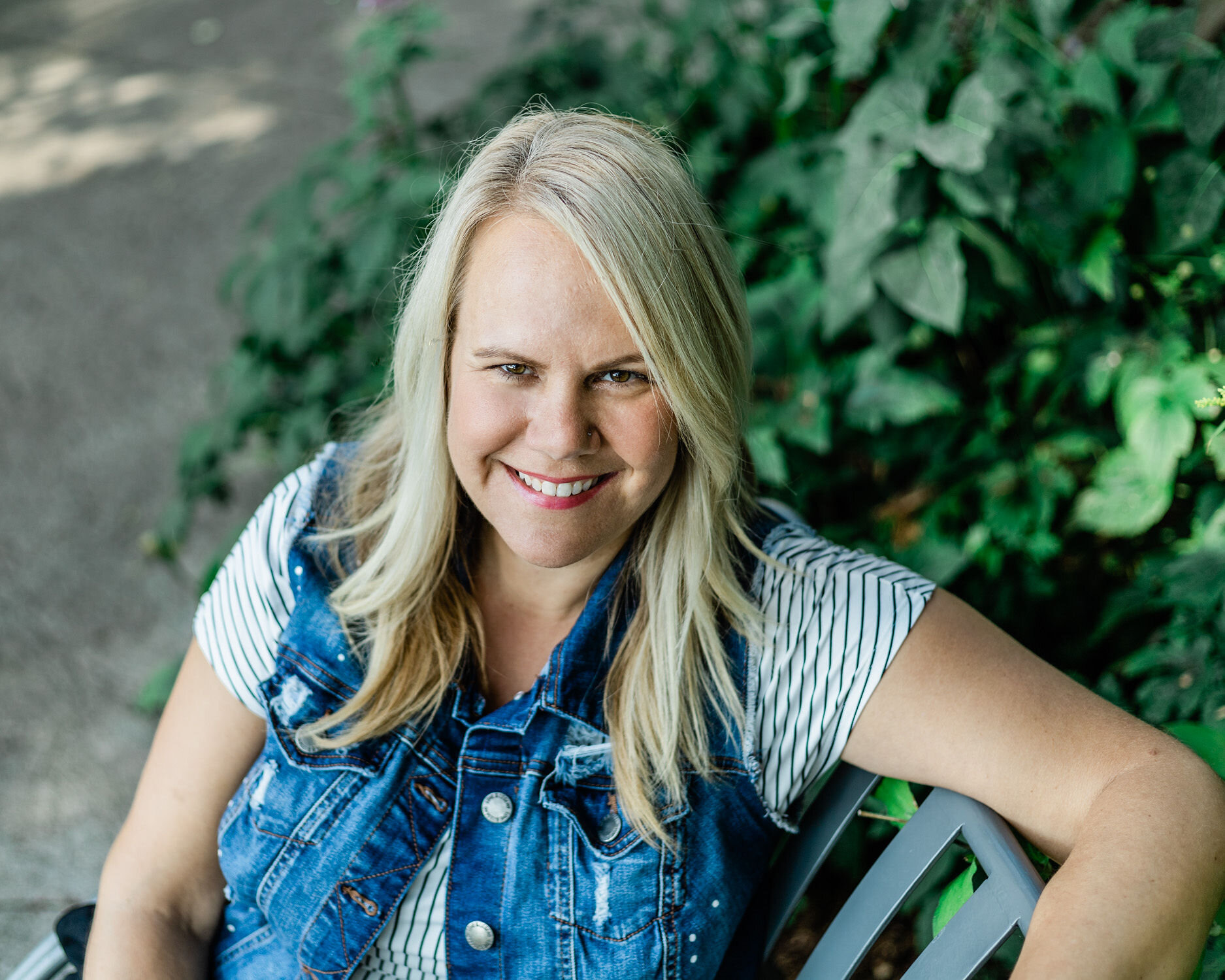
If something here touched you, that’s the invitation. Let’s work together to help you feel supported, embodied, and aligned with what you’re here to create.
