
ANDREA CRISP

“
Courage taught me how to survive. Alignment is teaching me how to live.”
The Hidden Exhaustion of Being “On” All the Time
Many women in leadership roles quietly carry an invisible pressure.
The pressure to always be composed.
To have answers.
To be the grounded one when everything around them feels uncertain.
For high-functioning women, leadership can slowly become something that feels managed, curated, and controlledinstead of natural and embodied.
In this episode of The CourageCast, Andrea Crisp shares an honest reflection about the moment she realized her leadership had subtly become performative — and how returning to alignment changed everything.
If you are navigating spiritual entrepreneurship, intuitive leadership, or visible work online, this conversation will likely resonate.
The Difference Between Performing and Leading
There is nothing wrong with being skilled at what you do.
Leaders often have experience, wisdom, and the capacity to hold others through challenging moments.
But there is an important distinction between showing up with competence and feeling the need to perform leadership.
Performative leadership often looks like:
Always needing to appear grounded
Feeling pressure to be the “healed one”
Avoiding vulnerability to maintain credibility
Managing how others perceive you
Staying constantly “on”
Over time, this creates strain within the nervous system.
As Andrea shares:
“Performance will always affect your nervous system because you’re constantly managing perception.”
The Identities That Can Trap Us
Many leaders unconsciously adopt roles that become part of their identity.
The strong one.
The wise one.
The spiritual one.
The healed one.
The regulated one.
While these qualities may be true, they can quietly become roles we feel responsible to maintain.
When leadership becomes about protecting these identities rather than living from truth, exhaustion inevitably follows.
Why People Trust Coherence, Not Perfection
One of the most powerful realizations Andrea shares is this:
“People don’t trust perfection. They trust coherence.”
Coherence happens when your internal experience matches what others see externally.
When you’re not managing perception.
When you’re simply present.
When your nervous system feels safe in your own leadership.
This type of leadership builds trust naturally because it is real, embodied, and grounded.
The Nervous System Cost of Performative Leadership
Trying to maintain an image creates constant nervous system activation.
You may notice:
tension in the body
bracing or clenching
hyper-awareness of how you’re perceived
emotional depletion
difficulty resting
This is your body signaling that leadership has shifted from alignment to performance.
Returning to authentic leadership requires rest, regulation, and honest self-reflection.
A Simple Practice to Return to Yourself
In the episode, Andrea shares a short guided practice to help release tension and reconnect with your body.
The practice focuses on:
softening facial tension
relaxing the jaw
releasing shoulder bracing
breathing into areas of stress
asking the powerful question:
“Where might I be performing right now?”
This simple moment of awareness can shift everything.
Leadership That Is Sustainable
Aligned leadership is not about being perfect.
It is about feeling safe within yourself as you lead.
Andrea shares:
“You don’t have to earn your leadership through performance.”
When your leadership aligns with your intuition, design, and purpose:
decisions become clearer
presence becomes magnetic
leadership becomes sustainable
If This Conversation Resonated
If you’re navigating the pressure of leadership and longing to reconnect with yourself beneath the roles you’ve carried, there are spaces to explore this work more deeply.
You can start by joining Coffee + Connect, a space for honest conversations and connection with thoughtful women.
Or explore 1:1 Coaching, where we work together on intuitive leadership, nervous system regulation, and embodied growth.
-
I want to talk today about something that almost no one wants to admit to. How exhausting it is to always be on. As high-functioning women, there is an unspoken pressure to be the one who gives advice, to always be grounded when times are tough, and to be strong when the pressure's on. And to be the ultimate example of a regulated leader. Which is why it is easy for leadership to become performative. Not fake.
not manipulative, but curated, managed, and controlled, and ever so slowly disconnected. Hey there, welcome to the CourageCast. My name is Andrea Crisp, and I'm so glad that you're joining me today. We're in a series called Courage to Alignment. I know it's not very exciting, the title, but it is really my own personal journey and evolution of the podcast and how
Things have changed over the many, many years that I have been showing up and recording these episodes. And if you've, by chance, been here since the beginning, and you have really seen the evolution of the podcast, you know that we have really come a long way. I am super proud of every iteration of the podcast from
the beginning of 2017 on. And I was thinking the other day, there's some people who, you know, have been podcasting a few years, and they've got, you know, hundreds and hundreds of episodes. And we're here at 395, I believe it is. And we don't have, you know, maybe even as many, but we have been here steadily showing up.
and sharing with you over the past eight years, which is crazy. And so I want to thank you for being here. You have a few more episodes before we shift into a new season of the podcast. I'm very excited about that. But today we're going to be talking about leadership that can be performative. And this is definitely one that might strike a chord with you.
it's a bit of a confession for me, because for a long time, I built my business and my leadership based on performance. And if you know that I am a musician, a singer, I play piano, you'll know that I have spent many, many years performing on stage. And so
There really was no big difference for me to, you know, jump into the online world and think that I should be performing here as well. And I didn't really know it was happening because I was playing out a pattern that I had created over time.
I realized how I was actually showing up. It is widely considered a good thing for a leader to have their shit together. And I think people come to expect that people in leadership really know what they're doing, they're experts in their field, and they have a little bit of experience under their belt to be able to perform at a high level.
But there is a big difference between performing and doing what they're good at and being a performative leader. And being a performative leader is a very, very slippery slope. Because when we're not showing up in a way that allows us to be perceived by others as real or authentic, and
just not really being vulnerable or humble, then we can get caught up in trying to just do things for likes or follows or for validation or approval from clients, instead of actually leading the way and showing up as an embodied leader. For me, it meant not letting anyone know what I was really going through.
There were many, many times in my business that I felt really uncertain about what I was doing or the direction I was going in, but I didn't want others to perceive me as not having my act together, not knowing what I was doing. So I would put on a bit of a front and just show the part of me that I wanted them to see, but that's very performative. And that was what I had learned.
how to do it was what I knew to do. And so I did it, I held space for women in my community, I, you know, led community groups, I did all sorts of things. And I wasn't getting the support that I needed. So even though I was fully available to the women in my community, I was actually pretty depleted myself and really trying to hold it together.
And it showed up in the ways that I, you know, didn't take time for myself. On weekends, I was constantly working. I was always doing things. I was trying to hustle. I was trying to be successful. And I wanted everyone to think that everything was great and that I was doing really well, when in actual fact, that was not what was happening at all.
When we fall into that pattern of being performative and just trying to show up in a way that, you know, we think others need to see, it doesn't work long term. Like you cannot sustain that. And there is always going to be a cost to that. And it may be a cost to you financially, maybe a cost to you relationally.
And probably most definitely it is going to cost your nervous system because you're always going to be scanning for who needs your attention. So I want to talk a little bit about authenticity versus performance. Like what does it look like? Now you hear a lot of coaches and a lot of people online talking about visibility and being seen.
And I really want to be able to, you know, be very clear about what I'm referring to. Because being visible when you are being authentic is really the goal. It really is. Being visible and performative is actually just going to repel clients. It is going to keep people from you.
fake. It's really not going to show the best parts of you. And I think that we can all fall into that habit every now and again, because, you know, there might be things going on in your life that you don't want people to see, or you really don't want to share all of the things that are happening in your world, which I don't think you need to do either. One of the telltale signs that you've
fallen into that performance or performative way of leading is when you are in the identity of being the strong one. Like you think you need to be the one who holds everyone together and shouldering all the problems and being the one who everyone leans on. And that becomes an identity in which you are operating.
out of. Or being the wise one, the one that people come to for advice or to, you know, feel like they're heard or they want to know what your opinion is. Or the healed one, the one who's done the inner work and who can share from a place of lived experience and people feel are spiritual or can manifest in a very beautiful way.
Or the regulated one who everyone perceives as calm and collected and always has their whole life kind of just on ease and flow. Or the spiritual one who's attuned to God in the universe. It doesn't really matter what identity you might fall into.
You can be all of those things. You can be strong, you can be wise, you can be healed, regulated, spiritual, and you can also be authentic and not put on airs that make people think that you are doing better than you are or that you, for some reason, are above any kind of negative things happening in your life.
Because truth be known, we're all going to have things that we go through as leaders. And even if you don't process it out in public, which I certainly do not, it's still important to be able to share that, yeah, there are things going on. And I'm a real person. I'm a real human. And people really are attracted to others who speak the truth.
So if you unconsciously start projecting any of those things, then you might feel your body responding to that through tension, through clenching, through bracing, because performance will always affect your nervous system. And it will say,
Like I have to stay consistent or I have to, you know, keep up airs or have to keep up this performance. Because it's always trying to manage what everyone's perception of you is. Whereas when you are leading out of your truth, when you're authentic, when you're showing up as yourself and embodying that, then you will be grounded and anchored.
And it will be felt without you even having to say anything. And here's the thing. People don't trust perfection, really. They trust coherence. This is something that took me so long to understand because I wanted to project that everything was perfect and that I had it all together. So I really had to, I had to get it through lived experience. I had to really.
learn the hard lessons for this so when you are showing up internally as you are externally your body will relax because it's it's basically like showing up and and everyone knowing that what is projected on the outside is actually what's happening on the inside I was actually at the gym today and I was watching the Netflix documentary with Eric Dane
It's called Famous Lust Words, you know, the McSteamy from Grey's Anatomy. And it was really the documentary on his life. And he shares in it that there was times when he realized that what was happening on the inside was not what people perceived on the outside. They didn't match.
He was probably referring to projecting one thing, but internally feeling something different. But when you allow yourself to do the inner work, when you allow yourself that time, the rest, the regulation, and really honestly process through things that you need to, you lead from coherence, where the external and the internal.
And that is a beautiful way to co-regulate. I know that leadership can be really lonely sometimes. I feel it myself. And there is a pressure that we feel to have it all together. And that can feel very heavy. And I remember when I first started to be vulnerable.
online and started to share you know what I was going through actually wrote emails and sent them out and recorded podcast episodes and I think I think I called it authentic me and I really had to be honest and open about you know some of the things in my life and it was so freeing to share that part of myself and after I did that I realized that
It wasn't as scary as I thought it was going to be. So even being vulnerable and transparent about where you're at, even after the fact, can release you from that feeling like you have to show up in a certain way. Now, there are a lot of people like, you know, they get online and they look like they just rolled out of bed and they're, you know, showing up. I have never done that.
I don't think I have done that. In the many, many years that I have been, you know, doing coaching, it just doesn't feel like me. Like I wouldn't do, I wouldn't get out of my bed and show up like that in front of a friend that was at the house, let alone online. So I have realized that being authentic for me looks like I brush my hair, I put clothes on.
And I put some effort in. But for some other people, authenticity looks like rolling out of bed and just showing up and recording a video. So it doesn't necessarily mean that you have to look a certain way or be a certain way. It just means that you are authentically you.
If you knew how many times I considered quitting coaching and just going back to a job that allows me to do mundane tasks and not lead anyone's, like it is literally a thought that I have daily, maybe weekly, but like it is often. And in order to have a sustainable business, in order to be the leader that you want to be, to feel safe in your leadership, it's going to require that you have the support.
and the rest and the regulation that you need. And even if you are feeling like you're carrying a lot right now, and it is very, very heavy, I want to invite you to take those moments to pause and allow yourself to truly be seen and truly be held. So I want to walk you through a little practice today. And if you're in the car, then I suggest maybe coming back to this and
and doing it later. But if you're in a safe environment, I just invite you to just take a moment for yourself. So if you can, and you're able,
just close your eyes for a moment or lower your gaze, whatever feels good for you. And just begin to notice how you're holding your face. And as you're bringing awareness to your face, just take a nice deep breath in through the nose and allow your muscles in your face to just soften. And then just take another nice deep breath in through the nose, maybe unclench your jaw and release through your mouth.
And then one more breath in and again, release. You may feel just like your whole face just completely relaxed. And now just bring awareness to your shoulders. Are they sitting high up by your ears or are they resting down? Either way, it's okay. Either way, you can be totally held.
in this moment. And just take a nice deep breath again in through the nose and out through the mouth. And ask yourself, is there anywhere in my life that I am performing right now? And just take a moment to tune in. Maybe something will come up for you or you'll recognize a pattern that you've been walking out. And if you feel any tension in your body, just breathe into it.
Allow the breath to release the stress, the tension, whatever you've been holding. Setting intention to bring your nervous system into rest. Not abandoning your responsibility, but just allowing yourself to be more of who you are. And now ask yourself, what would it look like for me to be more of myself?
to trust your leadership, to trust the imperfection of who you are and your lived experience. And then just take one more deep breath in through the nose and out through the mouth. Friend, your leadership will ebb and flow. You don't have to have it all together. There will be times when you may have to step away to gather yourself.
to come back to center, and to lead yourself first before you lead anyone else. And you certainly do not have to earn your leadership through performance. Being seen, being chosen, being the one that people hire, being the one who is successful or financially abundant does not require you to be performative.
And I've really never loved the phrase vacatio make it because I think that lends itself to trying to be something you're not when it's always going to be more beneficial to be exactly who you are and to grow your leadership honestly. Because when you feel safe with yourself, grounded in your own ability and capacity,
then others will feel safe to be with you as well. Now, friend, if this episode brought up something for you and you're starting to see how much energy it takes to be on all the time, I get that. I really do. This is the work that I support entrepreneurs, leaders, creatives through. Now, we don't spend time teaching you how to perform better or
craft a better image or be more visible. The work we do really allows you to tap into who you are at the core and to feel safe with yourself as you lead, as you step into more of your own truth beneath the roles that you have filled maybe your whole life or even now. And we tap into your intuition and where maybe you have been overriding it.
Looking at all of that honestly, so that you can take the steps you need to take to move forward. Because when your leadership is aligned with who you are, with your design, with your purpose, with your mission, then it stops feeling like it is something you have to manage because you're able to take the lead. Your decisions become easier and cleaner.
Your presence becomes something that people really feel and it's powerful. And you don't have to put on any airs before you walk into any room because you're not trying to calculate what your next move is when you're with a group of people. You're just there. That kind of leadership is sustainable. It builds trust and it allows people to really see you.
And it creates impact without abandoning yourself in the process. And if that's the direction that you're moving in, then I am here to support you either through one-on-one coaching or the group programs that I offer here.
And I love to connect with you. So if you haven't already connected with me online, you can find me at andreacrisp.ca or on Instagram at andreacrispcoach. And I love to chat with you. Of course, all the links to get to connect with me will be in the show notes and they'll be available for you. But friend, I want to say thank you for being here. We have a few more episodes.
in this series. I'm excited to bring them to you. I'm excited about the direction that we're going. I'm so grateful that you're here. And if this episode resonated with you, please share it with somebody and tag me in it.
It's on social. I love to say thank you in person. It goes a long way to, you know, growing the podcast, but also to helping women to truly step into that embodied leadership and into alignment when you share what has helped you navigate your own journey. And until next time, remember, you have everything you need to live bravely.
If you liked this episode of The Courage Cast, make sure to like, follow, and subscribe on your favorite podcast player. Original music and production by Stephen Crilly.

Listen Here:

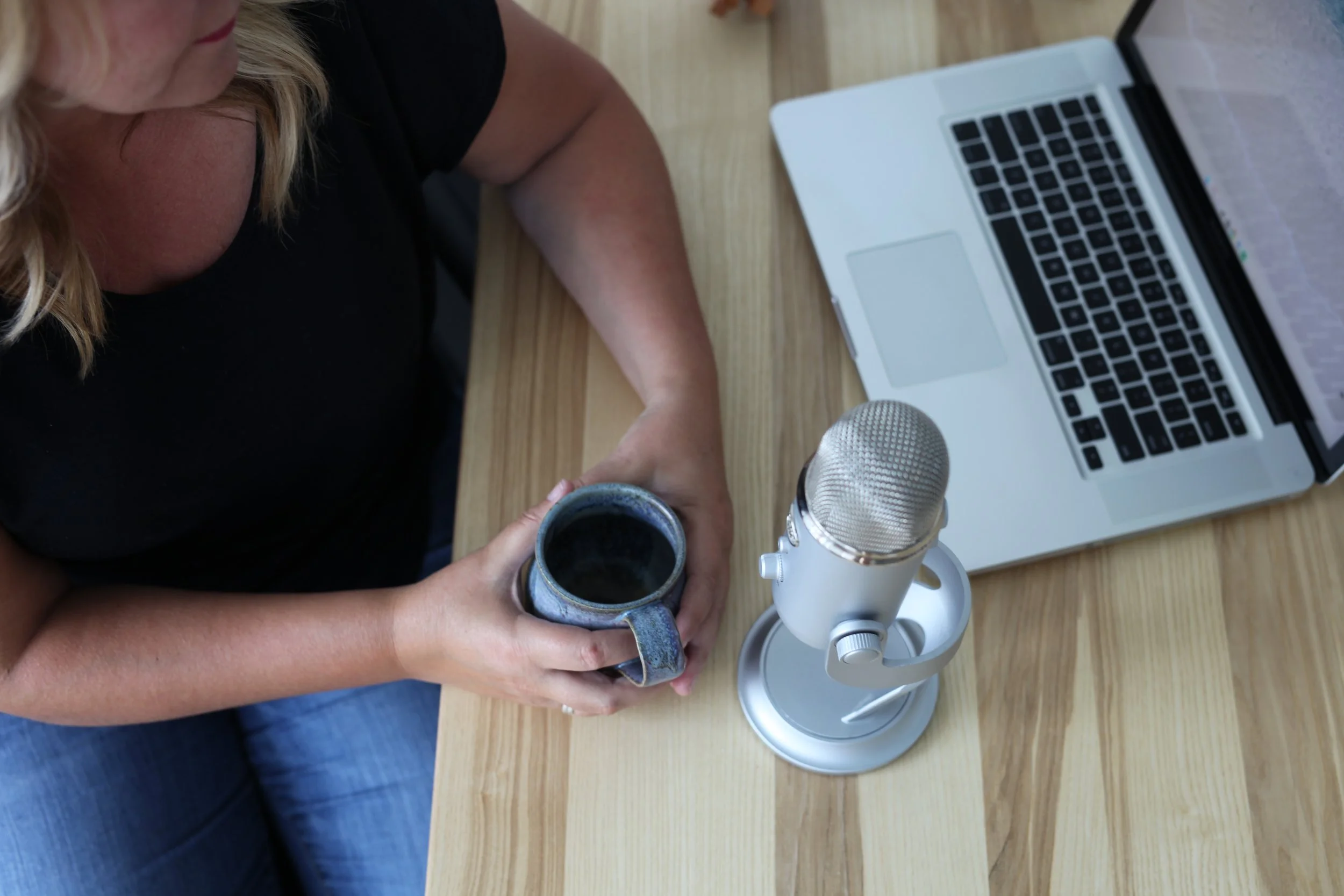


If something here touched you, that’s the invitation. Let’s work together to help you feel supported, embodied, and aligned with what you’re here to create.
